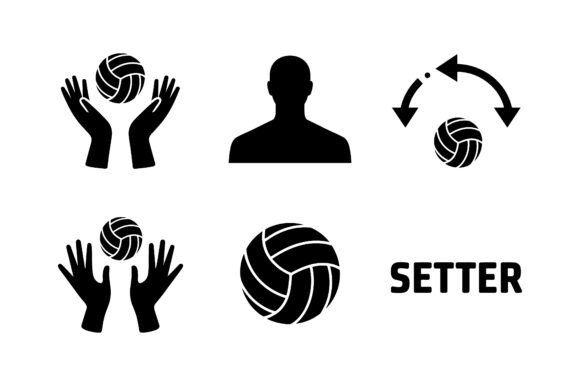
Volleyball Setter Vector Silhouette Set Review
As a designer who spends more time behind an embroidery machine than a computer screen, I approach every new graphic asset with a healthy dose of skepticism. We have all downloaded files that look pristine on a monitor but turn into thread nests or unrecognizable blobs once stitched out. When evaluating the Volleyball Setter Vector Silhouette Set, my primary focus was not just on the aesthetic appeal of these icons and graphics, but on their structural integrity for real-world production. This set targets a specific niche—the playmaker position—and promises essential imagery like setting hands and rotation symbols. But does it translate from screen to fabric without losing its identity?
First Impressions: Clean Lines for Sporty Aesthetics
My initial assessment of this volleyball setter vector silhouette bundle is that it understands the assignment of minimalism. In machine embroidery design, less is often more. The silhouettes are bold and distinct, which is exactly what you want when digitizing for apparel or accessories. Intricate shading often gets lost in stitch density, but these solid shapes provide a reliable foundation. The mood is energetic yet controlled, mirroring the precision required of a setter on the court. For an Etsy seller or small shop product creator, this visual clarity is crucial. Customers browsing thumbnails need to instantly recognize the sport and position without squinting at muddy details.
The inclusion of game rotation symbols alongside the traditional hand-setting imagery adds significant value. It moves beyond generic volleyball clipart and speaks directly to players who understand the technical side of the game. As graphics go, these feel purposeful rather than decorative filler. They possess a visual weight that suggests they will hold up well as both standalone embroidered patches and integrated elements in larger custom apparel compositions.
Real-World Application: The Custom Team Sweatshirt Test
To truly judge this digital embroidery file, I mentally walked through a recent client project: creating warm-up sweatshirts for a high school varsity setter squad. This scenario tests the design’s versatility across different sizes and placements. For the front left chest placement, the smaller hand-setting icon from the set would serve as a perfect pocket-sized emblem. Because the silhouette relies on shape rather than internal detail, it remains legible even at three inches wide. This is vital for baby embroidery or sleeve cuffs where space is limited.
For the back of the sweatshirt, combining the rotation symbol with player numbers creates a professional, boutique-level look. Here, the vector nature of the set shines. I can scale the graphic up for a large back print without pixelation, ensuring crisp edges whether I am using satin stitch borders or fill stitch interiors. When producing handmade products for team fundraisers, this scalability means one purchase covers multiple hoop size requirements. The design assets feel cohesive, allowing for matching tote bag designs and warm-up gear that looks like part of a unified brand rather than mismatched internet finds.
Navigating Fabric Variables and Stitch Challenges
However, no design is bulletproof, and this set requires thoughtful application depending on your substrate. While the silhouette style is forgiving, placing these icons on textured fabrics like terry cloth towels or pique polos demands caution. On high-pile fabrics, thin running stitch outlines can disappear. If you are adapting this vector set for embroidery, ensure your digitizing includes adequate underlay or consider converting the silhouette into an applique design to prevent the fabric texture from compromising the image.
Stretchy performance wear presents another variable. Volleyball gear is often made of moisture-wicking synthetic blends that shift easily in the hoop. Even though these graphics are relatively simple, improper stabilization can distort the circular geometry of the ball or the anatomical proportions of the hands. Always pair this embroidery project with appropriate cut-away stabilizer. Additionally, if you are stitching on dark navy or black garments common in volleyball uniforms, verify that the design does not rely on color gradients to define form. Since these are silhouettes, they should read clearly in white or metallic thread against dark backgrounds, but testing contrast is non-negotiable before committing to a full production run.
Critical Considerations for Small Hoops and Caps
Cap embroidery introduces curvature that flattens 2D vectors. The hand-setting icon might look fantastic flat, but wrapping it around a structured cap front could distort the finger spacing. Before using this set for headwear, simulate the wrap in your software or test stitch on a scrap cap. Similarly, for tiny lettering accompanying these icons, remember that standard fonts rarely stitch well below 0.25 inches. You may need to simplify any text elements included in the bundle to maintain readability in small hoop sizes.
Commercial Viability and Professional Presentation
For creative entrepreneurs and commercial embroidery businesses, time is money. This set supports efficiency because the clean lines reduce unnecessary jump stitches and trims compared to complex illustrative designs. Fewer stops mean faster run times and less post-production cleanup. From a sales perspective, the specificity of "setter" graphics allows for targeted marketing. Instead of competing in the saturated general volleyball market, you can dominate a micro-niche. Personalized gifts featuring position-specific icons command higher perceived value because they feel custom-made for the recipient's role.
When creating printable mockups for your online store, these vectors render sharply, helping build customer trust. Buyers can see exactly what they are purchasing. However, always confirm licensing terms before selling finished items or digital derivatives. Ensure your commercial embroidery rights cover the intended use, especially if you plan to offer the digitized version as a standalone digital product. Transparency regarding usage rights protects your business and respects the original artist.
Designer Notes for Successful Execution
Before loading this volleyball setter vector silhouette set into your machine, adhere to these practical checkpoints to ensure professional results:
- Test on Scrap Fabric First: Never assume a file is stitch-ready out of the box. Run a test on the exact fabric and stabilizer combination you intend to use for the final product.
- Verify Thread Color Contrast: Check how the silhouette reads in monochrome. If the design relies on multiple colors for definition, it may fail as a single-color patch.
- Review Stitch Density Settings: Vectors must be converted to stitches. Ensure your auto-digitizing settings aren't too dense for lightweight jersey knits or too sparse for heavy canvas tote bags.
- Inspect Small Details: Zoom in to check finger separation in the hand icons. If gaps are smaller than 1mm, merge them to prevent needle breaks or fabric perforation.
- Mockup in Black and White: Validate the design’s strength without color crutches. A strong silhouette works in grayscale; a weak one falls apart.
- Confirm Licensing: Double-check whether the license permits selling physical embroidered goods versus digital files. This distinction is critical for Etsy sellers and craft business owners.
- Check File Compatibility: Ensure the provided formats match your machine’s requirements before purchasing, as vector source files differ from machine-specific embroidery files.
Ultimately, the Volleyball Setter Vector Silhouette Set offers a strong foundation for athletic merchandise and personalized gifts. Its success in your studio depends on respecting the relationship between digital art and physical thread. By approaching these graphics with technical mindfulness and creative intention, you can transform simple vectors into premium embroidered products that resonate with players and buyers alike. Treat the vector as a blueprint, not a finished product, and your stitch-outs will consistently ace the quality test.